Our last theme was the gorgeous coast of Oregon. In contrast, we are going to share with you the volcano range of the Cascades in northern California, Oregon and Washington, plus the Olympic peninsula in Washington and Glacier National Park in northern Montana on the border with Canada. We’re saving Yellowstone for its own separate post. Same for Seattle and ditto for Portland and the Columbia Gorge. Yikes, we have a lot of catching up to do!
When we arrived at Mt. Lassen in mid June, we had no idea that snow in the park would render a visit there nearly useless as the bulk of the park was CLOSED to vehicles. The visitor’s center was open, and a short 2 miles past that was as far as you could go! Here is a photo of Ken at the end of the road at the snow bank. Can you see the snowman?
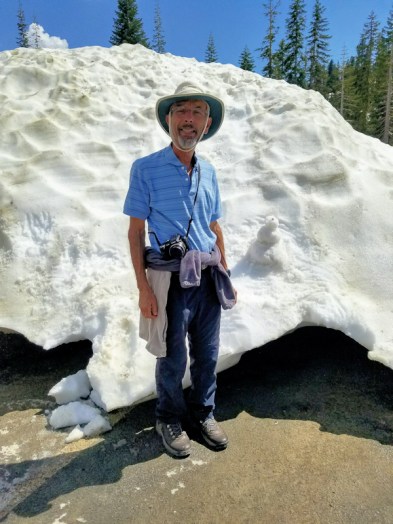
That’s a lot of snow that needs to melt!
We did learn a great deal about the entire volcano area of the Cascades that lead all the way up to Mt. St. Helens. These are all classified as active. We planned on visiting Mt. Rainier and driving by Mt. Shasta. These are all the tallest peaks in the U.S. To make the best of our two full days here, we took a side trip to Burney Falls, which was spectacular! Teddy Roosevelt had high praise for them.
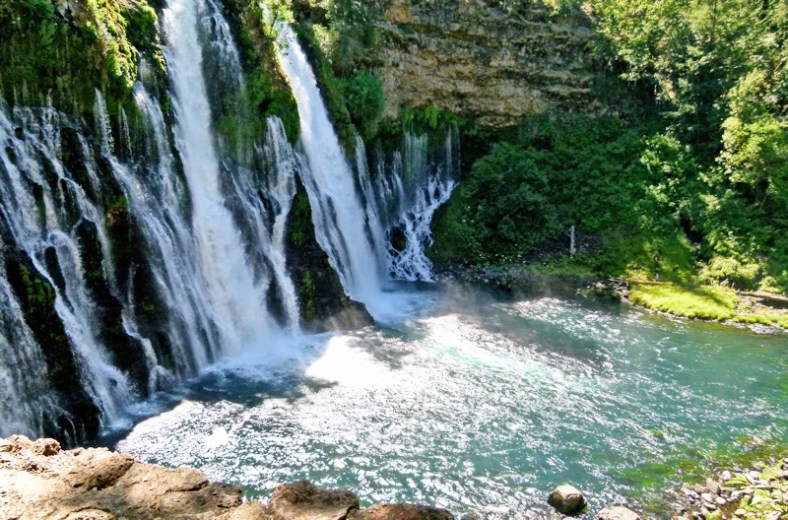
Our next National Park adventure was to Crater Lake. But, I want to back up a little bit because we first went to Grants Pass in Oregon to visit with my brother, Richard, whom I haven’t seen in a very long time. On our way to Grants Pass, we drove near Mt. Shasta.

Crater Lake was also covered with snow! But, most of the roads were open. Hiking was not an option, unless you had snowshoes. I can’t believe that in mid to late June, there’s still snow in these areas! I guess that over 280 inches of snow per year takes a long time to melt in the high elevations. The lake tour boat doesn’t start running until July 4th weekend. Crater Lake is the deepest natural lake in the US at 1,949 feet at its deepest point. It is also part of the cascade volcanic range due to the surrounding mountains. It was formed by a collapsing volcano. There are no rivers or streams that feed into it. It has the bluest water color to it.
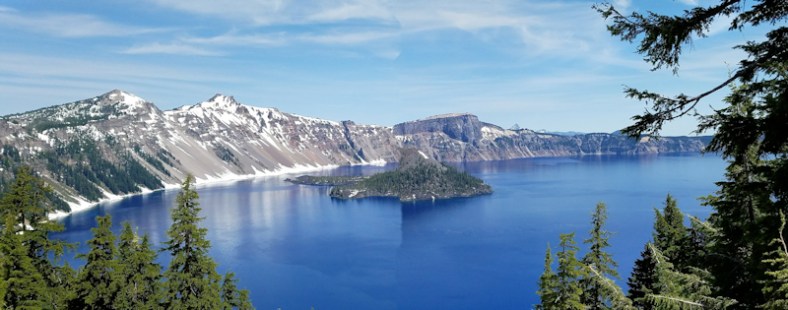
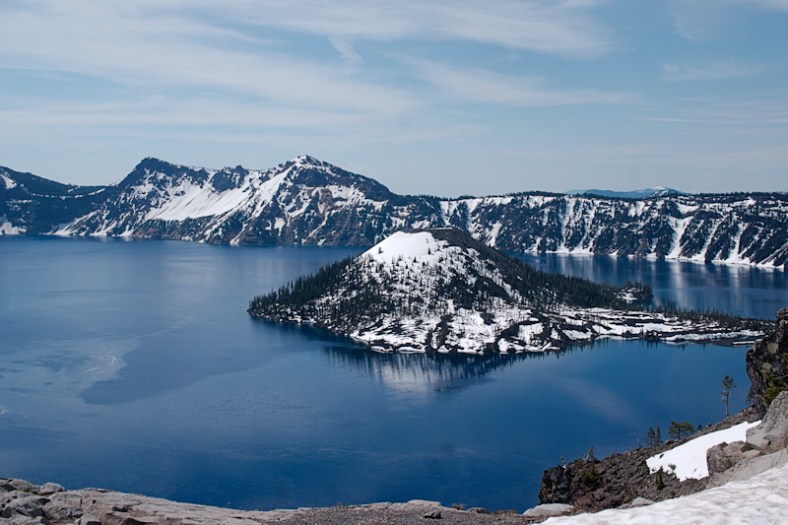
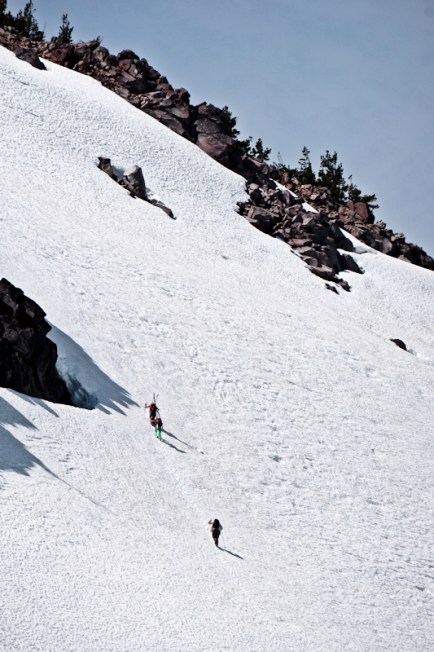
In this photo below, you can see some climbers with snow gear tackling the nearby trail!
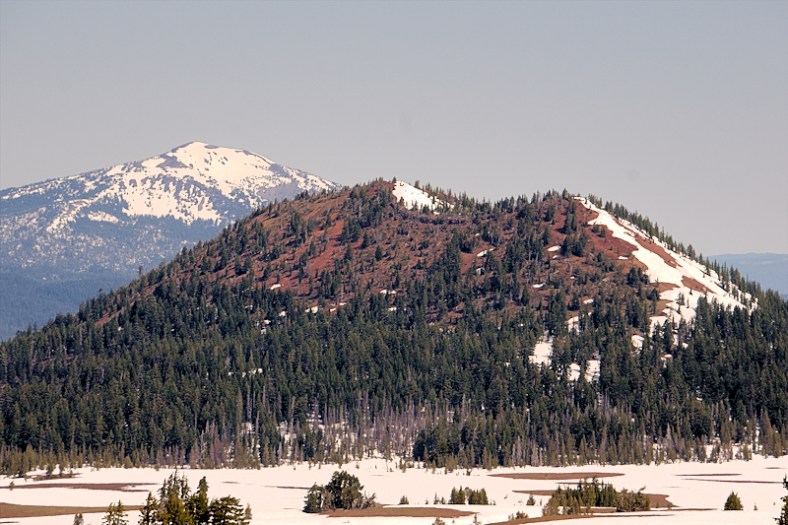
While visiting the area, we did the cascade area “waterfalls” byway trail by car and visited many waterfalls. We’re still hoping to combine our photos and videos to put together a post on waterfalls.
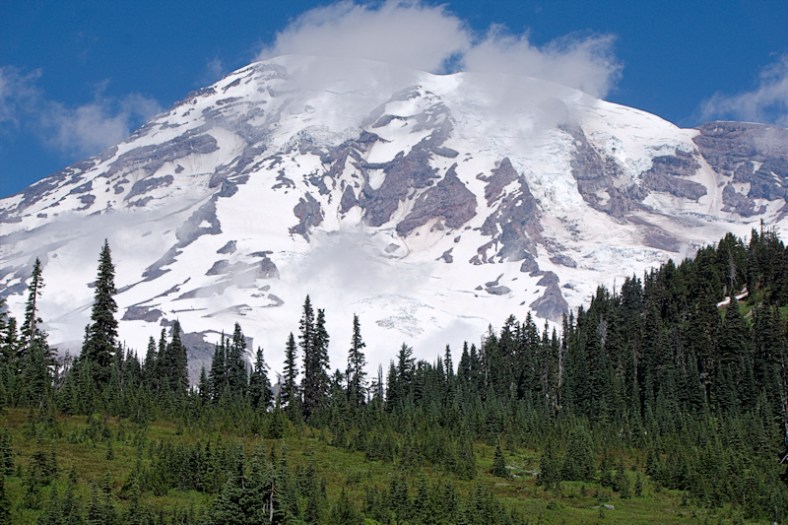
Our next visit was to Mt. Rainier, and you would imagine that by then (July 14th), the snow would be all gone. But, no, there was still snow in places! Of course, the snow is always present on the peaks along with the many glaciers. We would’ve visited Mt. St. Helens since our campground was close to both, but the highway to St. Helens had a washout and was closed to traffic so that was not going to happen. Mt. Rainier’s “Paradise” area is known for its beautiful wildflowers and we caught them just in time. It was so interesting to watch the cloud formations around the peak (elevation is 14,411 ft.). We had a cloudless day, but not at the peak as clouds would come and go just there.


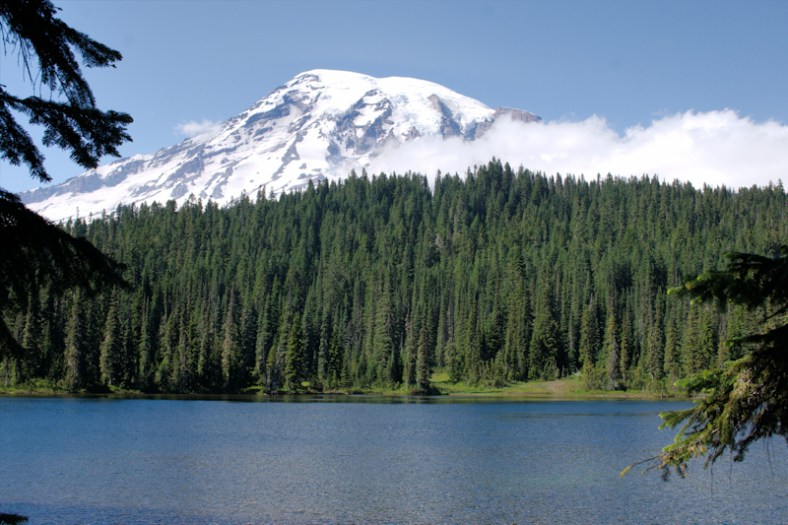
Mirror Lake
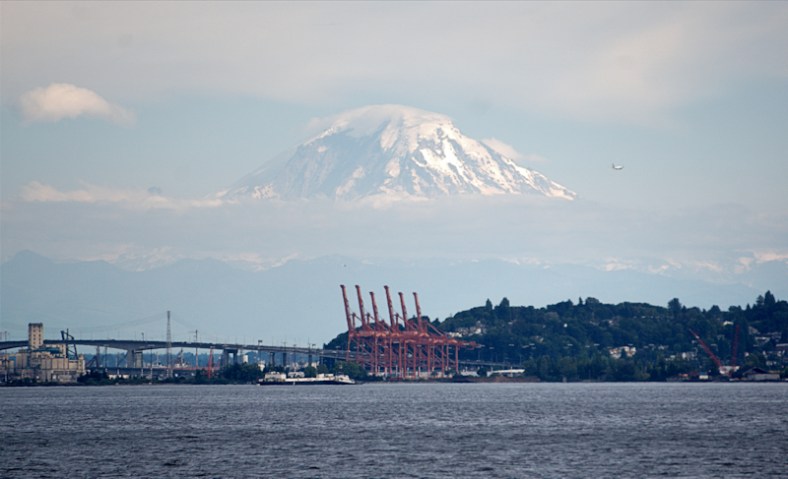
Interestingly, we were able to see the peak of Mt. Rainier appear out of what seems like “nowhere” in Seattle harbor. It’s 90 miles away. Pretty spooky photo!
The Olympic peninsula in Washington state hosts Olympic National Park. Here we have really tall mountains that meet the Pacific ocean. Again, they are so high, they remain snow covered. This park requires quite a bit of driving to see the sights as it’s a huge park with no central location. We should’ve allocated more time to spend here because of this.
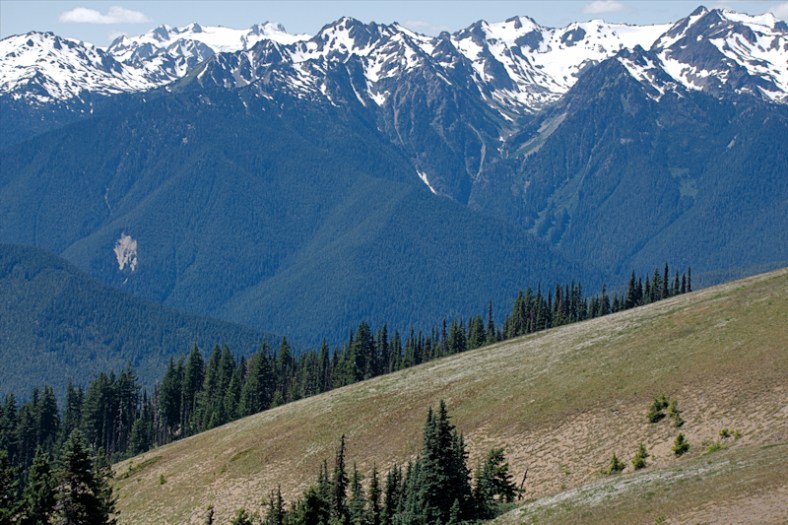
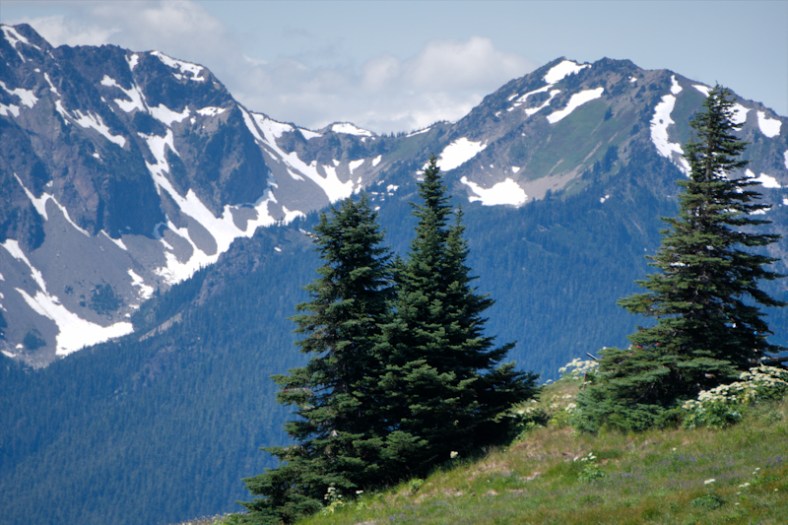
From the Olympic peninsula we move on to Glacier National Park in upper Montana, straddling the Canadian border. The scenery in the park is splendid, but unfortunately, the infrastructure cannot accommodate the number of visitors that want to spend time visiting here. The roads are windy and narrow in a fairly large section of the park and is pretty much recommended only for their small shuttle buses to use. In other words, no cars for the feint of heart. Ken will not drive! We found that you have to wait 2 to 3 hours to board a bus for the entire road trip, starting from the Visitor’s Center. There’s no parking anywhere else. Then you board the small shuttle for the winding area. This process takes all day! You don’t really have time to get off at the different places for sightseeing and hiking. Most of my photos were taken through the bus or shuttle windows. What a shame! And there’s nothing that can be done to fix this. It is a beautiful place, though.
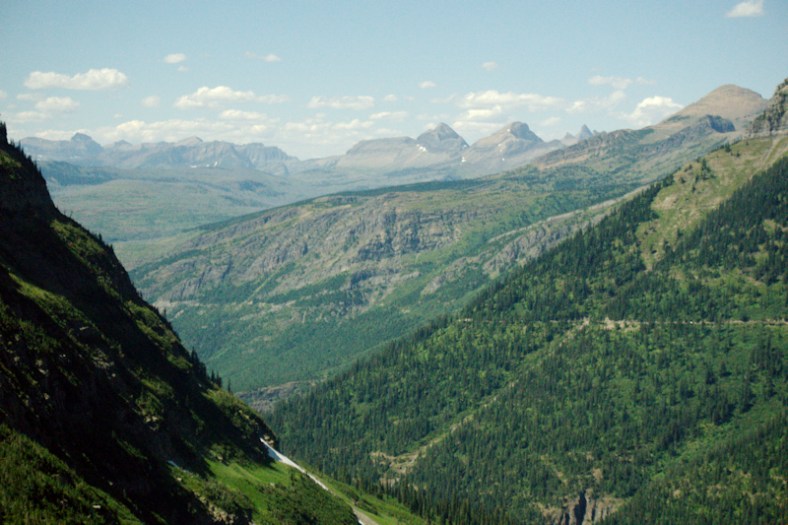
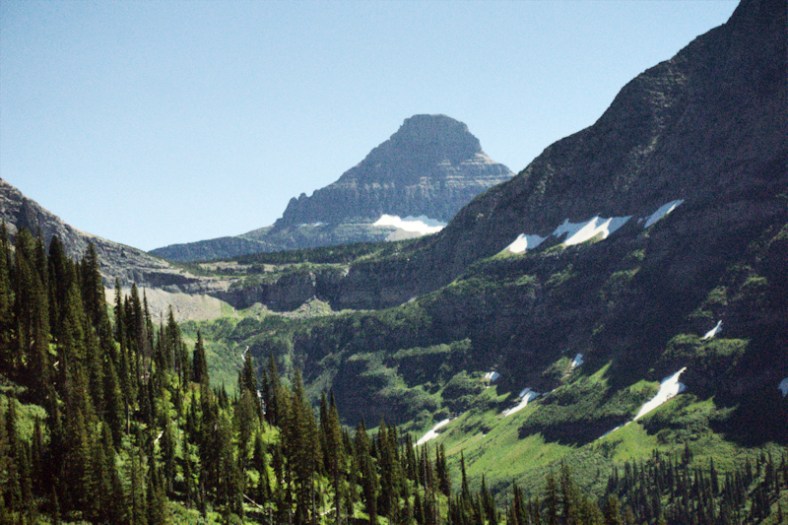
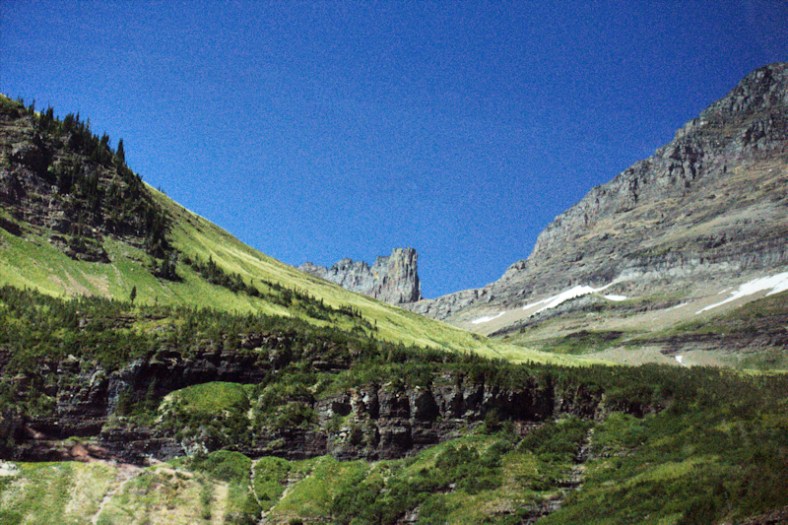
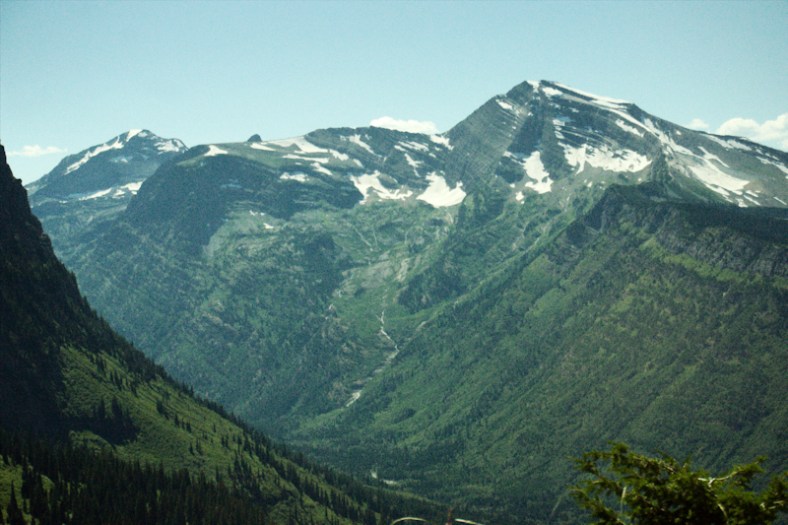
It’s neat to see snow covered peaks in the heat of summer. It is also a reminder about how diverse our climate is in this country. And, of course, these mountains are all part of what makes this country so “GOSH DARN BEAUTIFUL”!
 Ken and Ellen's Woodwind Prairie Schooner Travel Blog
The words that come to mind for me are VIVID and CRISP!
LikeLike
Thanks!
LikeLiked by 1 person