The National Naval Aviation Museum (http://www.navalaviationmuseum.org/) is impressive! Using all criteria possible it is impressive. It is HUGE, well run, comprehensive and fun. I do not need to make this chapter a brochure. Go to the link and see all that the museum has to offer. There were some specific highlights that for me had special meaning.
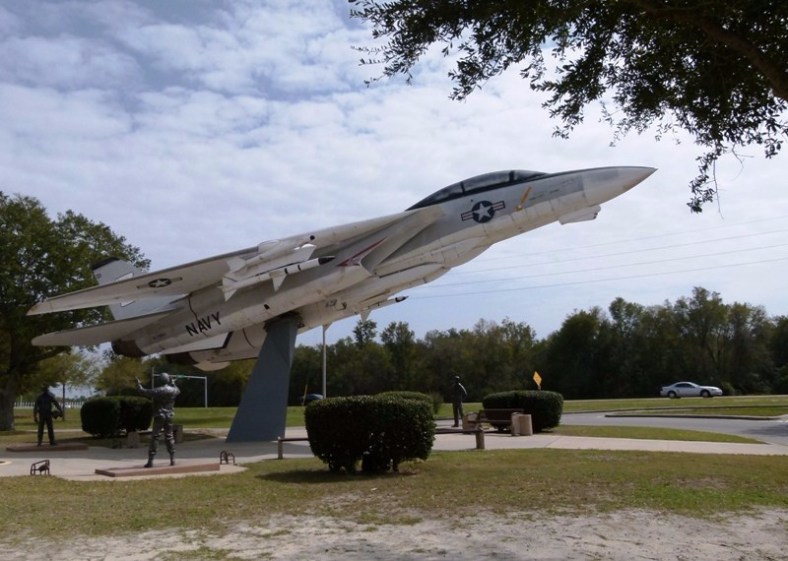
Entrance to the National Naval Aviation Museum
The docents are not just knowledgeable, they lived through some aspect of what they show and have very personal stories to tell. Our guide told us about some of his fellow soldiers coping with conditions inside a Vietnamese POW camp. About tapping Morris code on the walls to communicate feelings when they were told they couldn’t talk.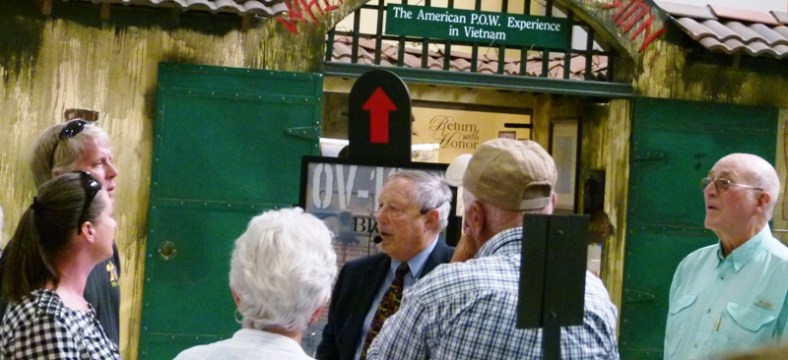
The history of aviation is told here, but I want to concentrate on just a few aspects of that history as it relates to me. In Annapolis, where I sail, I always point out where the Greenbury Point Naval Air Station was located (the FIRST naval air station in the USA), now the Navy Yard. Naval Midshipmen were required to learn how to fly the N3N, nicknamed the Yellow Peril. Named the Yellow Peril because it was (duh) yellow and peril because Midshipmen’s commission was in peril if they did not master flying the craft. They have both the sea plane its land equivalent. The difference is the landing gear. The pontoon for the Navy and standard strut and wheels for land.
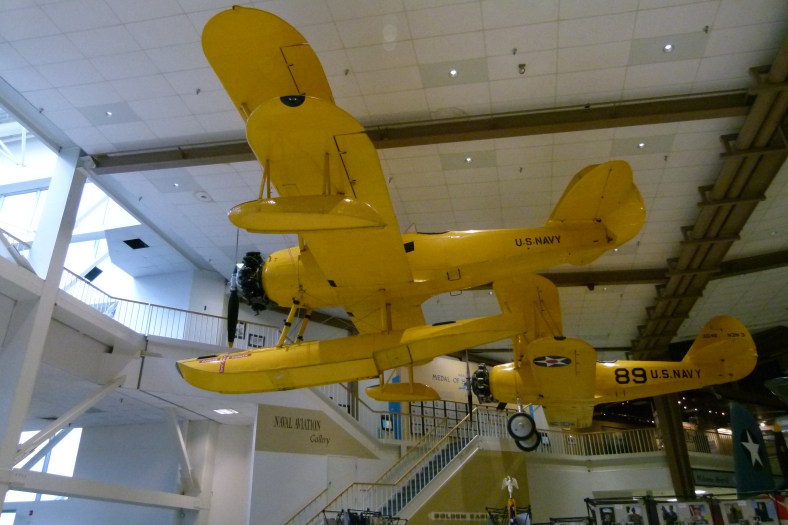
The N3N were first placed into service as training planes in June 1936 at NAS Pensacola, FL.
The planes were used at the Naval Academy, in Annapolis from 1946 (my birth year) to 1959.
The other planes that are specific to my life are the Blue Angels F/A 18 shown below. Every May we have the thrill of seeing these planes during the graduation week at the Academy.
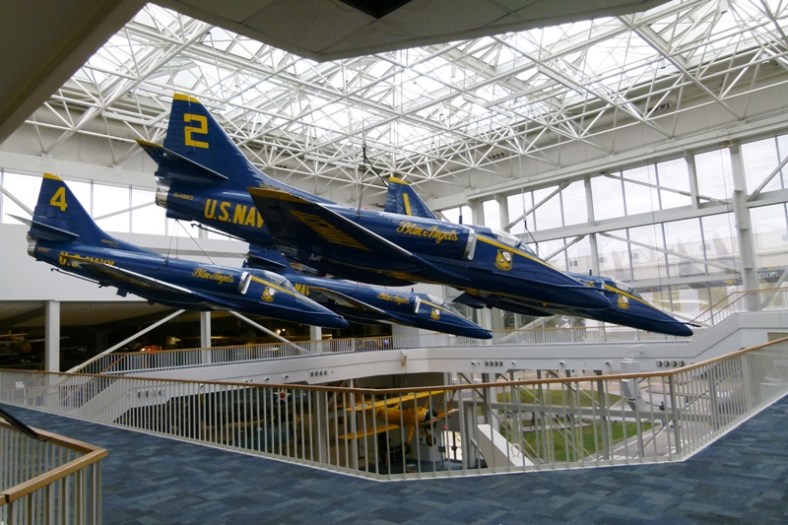
I originally planned on cropping this photo, but it shows the drama of the planes as if they are in flight. My praise to the museum in how they used this space. But wait, wait! Look below the middle “angel” and you can again see the “N3N” which represents a span of 59 years, from earliest production of the “N3N” to the last model of the F/A 18 production.
 Ken and Ellen's Woodwind Prairie Schooner Travel Blog